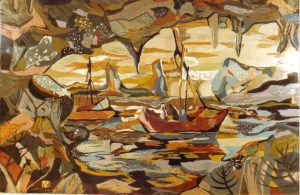
Soon after the Second World Conflict, while he was carrying on his art studies in Paris, NGUYỄN Sao met a small group of artists compatriots, one of them TRAN Minh Tho, having kept links with a lacquer workshop in Saigon, he could then start painting with natural Vietnamese lacquer.
However, due to difficult and irregular deliveries of this precious material from Viêt Nam, he probably chose to limit the use of wooden panels – their preparation needing much material – and to keep genuine lacquer for the sole painting.
The precise realizations made between 1948 and 1951 are not known for the time being. One example dated from that period, has recently been introduced to the public by the Auction House Aguttes. It is “Conversation in the underwood“, Paris, circa 1950, egg shells, pigments and lacquer on canvas, 73×96.
Back in Viêt Nam in 1952, NGUYỄN Sao resumed the traditional lacquer art, to reach between 1960-1971 the summit of his artistic creation as a Master in lacquer painting.
Lacquer paintings on wooden panels were shown at three exhibitions by the end of 1962. Eleven lacquer paintings were exhibited in 1963. And in 1965, thirty lacquer paintings were shown at the Alliance Française Exhibition, representing two years of work and researches. On the eve of his return to France, he owns about fifty lacquer paintings on wooden panels.
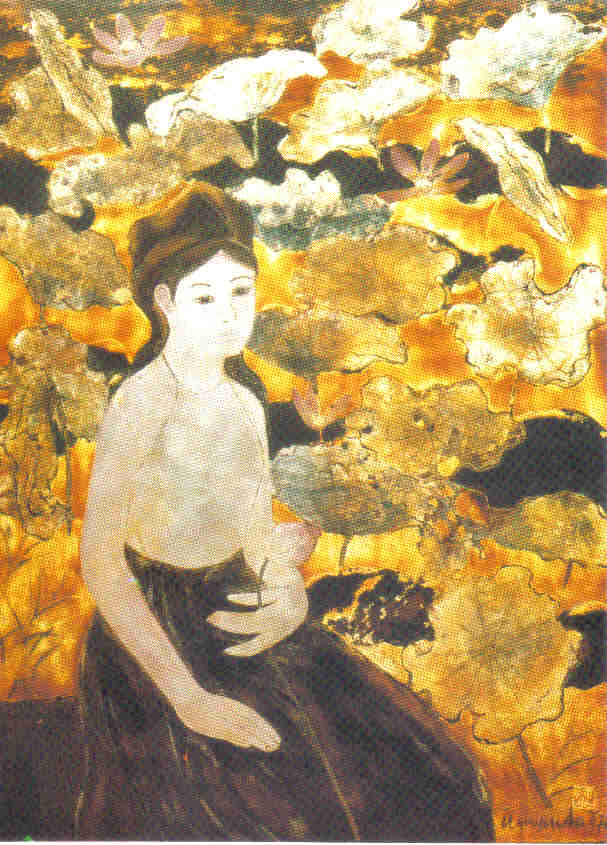
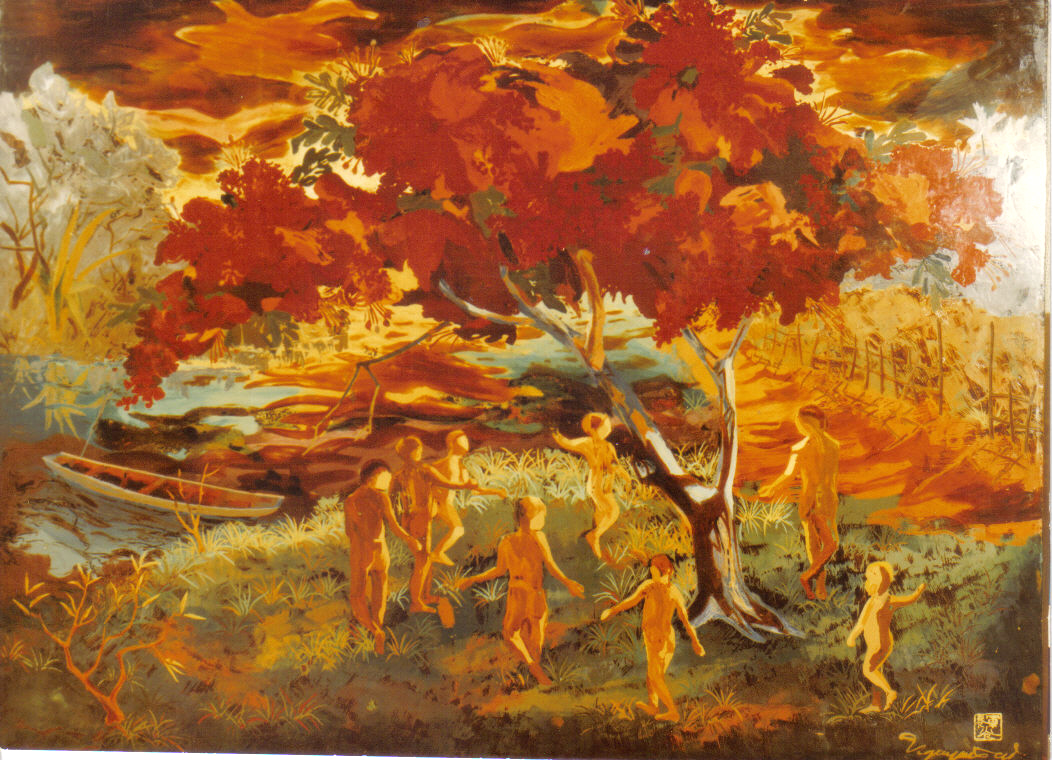
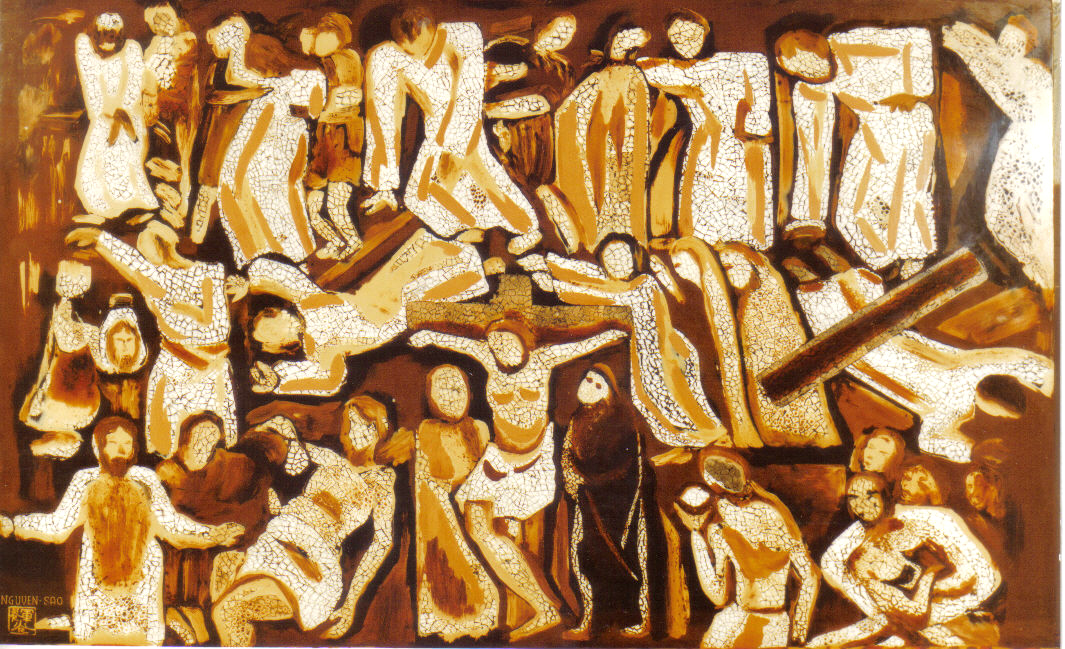
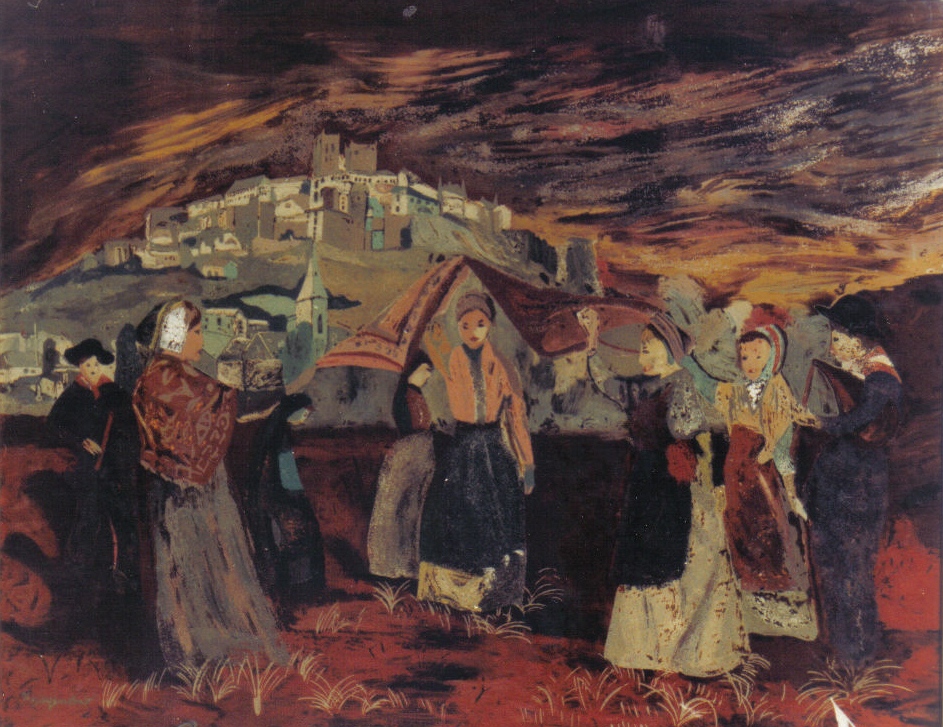
NGUYỄN Sao’s lacquer paintings look very much like his paintings : he actually uses a very personal technique where tints are finely produced, even in the parts carved with egg shells. Thanks to the choice of shells, in burning and in crushing them to obtain a fine powder mixed with lacquer, he succeeds in obtaining a palette nearly as rich as the oil painting one.
While placing bits of shells on lacquer, spreading over them one or two layers of transparent lacquer and stopping pouncing at the right moment, he realizes this very particular relief effect with an extraordinary display of colours.
Great artworks were thus conceived according to this process and were acquired by art collectors. We may cite among others : “Les trois Parques“, “La couronne d’épines du Christ“, “Le chemin de croix“, “Les baigneuses“…
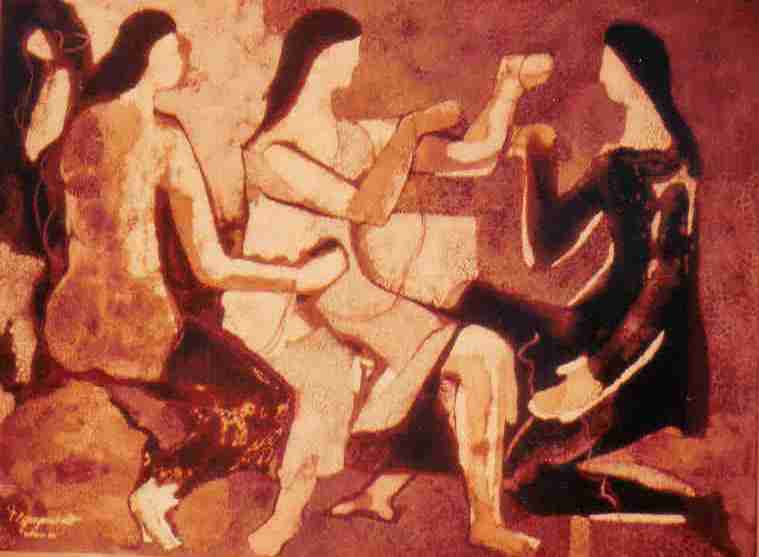
He also made many researches to mix lacquer with the so-called “immortal” colours, so as to obtain intermediary colours, more subtle and fresher tints than those of the traditional lacquer paintings. He thus created a rich variety of grey-pink, grey-blue and grey-green. With these mixtures and tones really new in this field, he gave to his panels of lacquer numerous colours of classic paintings.